
The History and Significance of Temple Jewellery in India
Introduction
Temple jewellery is one of India’s most treasured artistic traditions, representing a perfect blend of spirituality, craftsmanship, and cultural heritage. Originally created to adorn deities in ancient South Indian temples, these magnificent ornaments have evolved into a celebrated jewellery style worn by brides, classical dancers, and jewellery enthusiasts across the world. The intricate detailing, divine motifs, and regal appearance of temple jewellery make it a timeless symbol of Indian artistry and devotion.
Over centuries, temple jewellery has maintained its relevance despite changing fashion trends. Its enduring appeal lies in its ability to connect modern wearers with India’s rich cultural past. From elaborate necklaces and chokers to statement earrings and bangles, every piece reflects a story of faith, tradition, and exceptional craftsmanship. Today, both traditional and contemporary jewellery lovers appreciate temple jewellery for its heritage value and distinctive aesthetic appeal.
The growing popularity of antique temple jewellery designs has further strengthened the demand for these handcrafted masterpieces. Modern designers continue to reinterpret traditional motifs while preserving the essence of this ancient jewellery form. Understanding the history and significance of temple jewellery helps us appreciate the remarkable journey of this iconic adornment from sacred temples to contemporary jewellery collections.
The Origins of Temple Jewellery
The origins of temple jewellerys can be traced back more than a thousand years to the magnificent temples of South India, particularly during the reigns of the Chola, Pandya, Vijayanagara, and Nayak dynasties. During this period, temples were not merely places of worship but also centers of art, culture, education, and economic prosperity. Kings and wealthy patrons donated precious ornaments crafted from gold and gemstones to adorn temple deities as offerings of devotion and gratitude.
These sacred ornaments were meticulously handcrafted by skilled artisans who specialized in creating jewellery inspired by religious iconography. Every necklace, pendant, bracelet, and crown was designed to enhance the divine appearance of temple idols. The jewellery often featured depictions of Hindu gods, goddesses, celestial beings, and sacred symbols that reflected spiritual beliefs and cultural values.
The artistic techniques developed during this era laid the foundation for what is now recognized as temple jewellery. The exceptional craftsmanship displayed in these ornaments demonstrated the advanced metallurgical and artistic skills of ancient Indian goldsmiths. Their dedication to detail ensured that each piece served both a decorative and spiritual purpose.
As temple rituals became more elaborate, the demand for intricate jewellery increased significantly. Over time, the styles and techniques used in creating these sacred ornaments influenced jewellery worn by royalty and nobility, eventually extending beyond temple walls into broader society.
Evolution from Sacred Adornment to Personal Jewellery
Temple jewellerys initially remained exclusive to religious institutions and royal families. However, as cultural traditions evolved, these magnificent designs gradually became accessible to a wider audience. Wealthy patrons commissioned similar ornaments for ceremonial occasions, weddings, and festivals, allowing temple-inspired jewellery to become part of personal adornment.
The transition from sacred ornamentation to wearable jewellery did not diminish its spiritual significance. Instead, people embraced these designs as symbols of prosperity, blessings, and cultural identity. Wearing temple jewellery became a way of honoring tradition while celebrating important life events and milestones.
During the colonial era, many traditional art forms faced challenges, yet temple jewellerys managed to survive due to its strong association with religious practices and classical dance traditions. Bharatanatyam, Kuchipudi, and Mohiniyattam dancers continued to wear elaborate temple-inspired ornaments during performances, helping preserve the craft for future generations.
In recent decades, temple jewellery has experienced a remarkable revival. Contemporary consumers appreciate its heritage value, intricate craftsmanship, and timeless beauty. Today, temple jewellery is a prominent feature in bridal collections and luxury jewellery markets, attracting admirers from around the globe.
Cultural Significance of Temple Jewellery
Temple jewellery holds immense cultural significance because it embodies centuries of artistic, spiritual, and social traditions. Unlike ordinary ornaments, these pieces represent a deeper connection to India’s religious heritage and cultural identity. The motifs and symbols incorporated into temple jewellery often carry profound meanings rooted in Hindu mythology and philosophy.
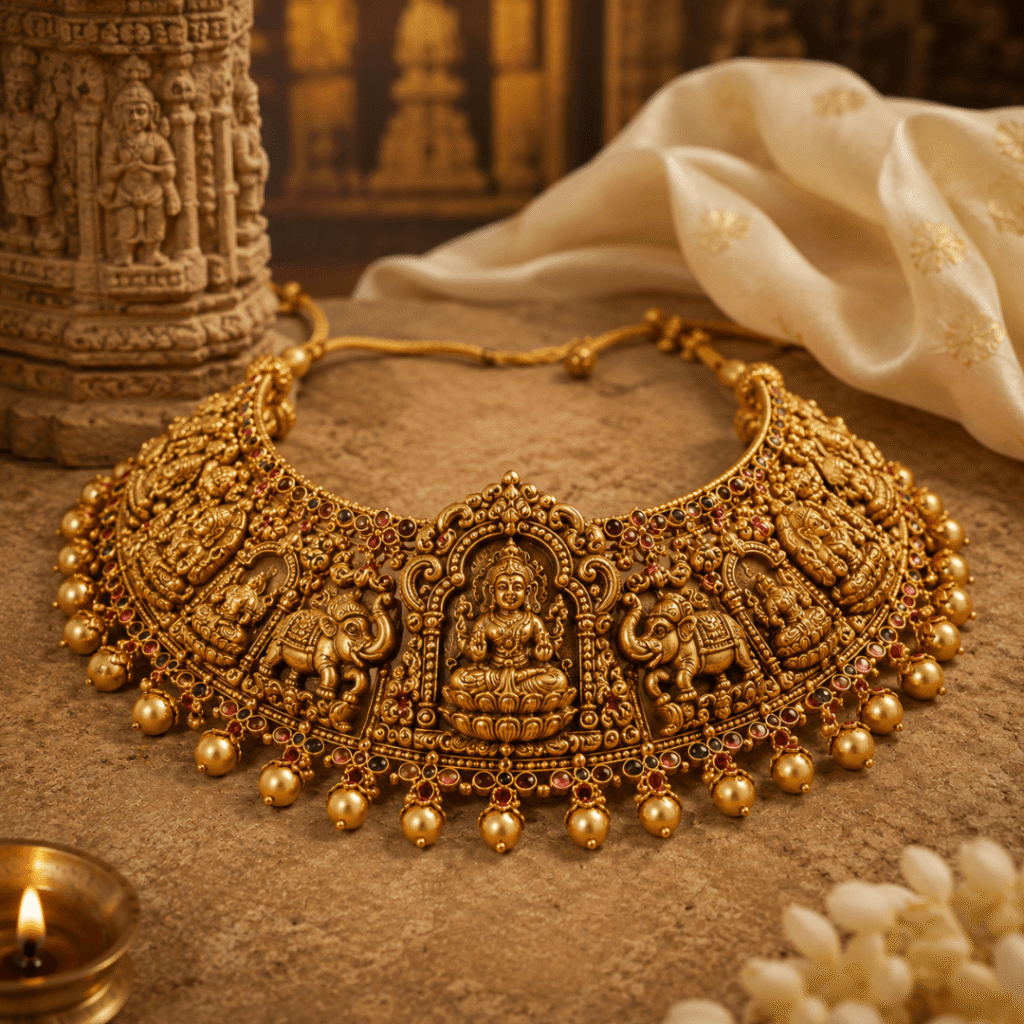
Many temple jewellerys designs feature images of Goddess Lakshmi, the deity associated with wealth, prosperity, and abundance. Wearing ornaments depicting Lakshmi is believed to invite blessings and positive energy into one’s life. Similarly, motifs inspired by peacocks, elephants, lotuses, and sacred temples symbolize beauty, strength, purity, and spiritual growth.
The importance of temple jewellerys extends beyond symbolism. It also serves as a cultural bridge connecting generations. Families often pass down heirloom pieces as treasured possessions, preserving memories, traditions, and values through beautifully crafted ornaments. These heirlooms become tangible links to family history and ancestral heritage.
In modern society, temple jewellerys continues to represent pride in Indian craftsmanship and cultural traditions. Whether worn during weddings, religious ceremonies, or festive celebrations, these ornaments help maintain a connection with the country’s rich artistic legacy.
The Role of Temple Jewellery in South Indian Weddings
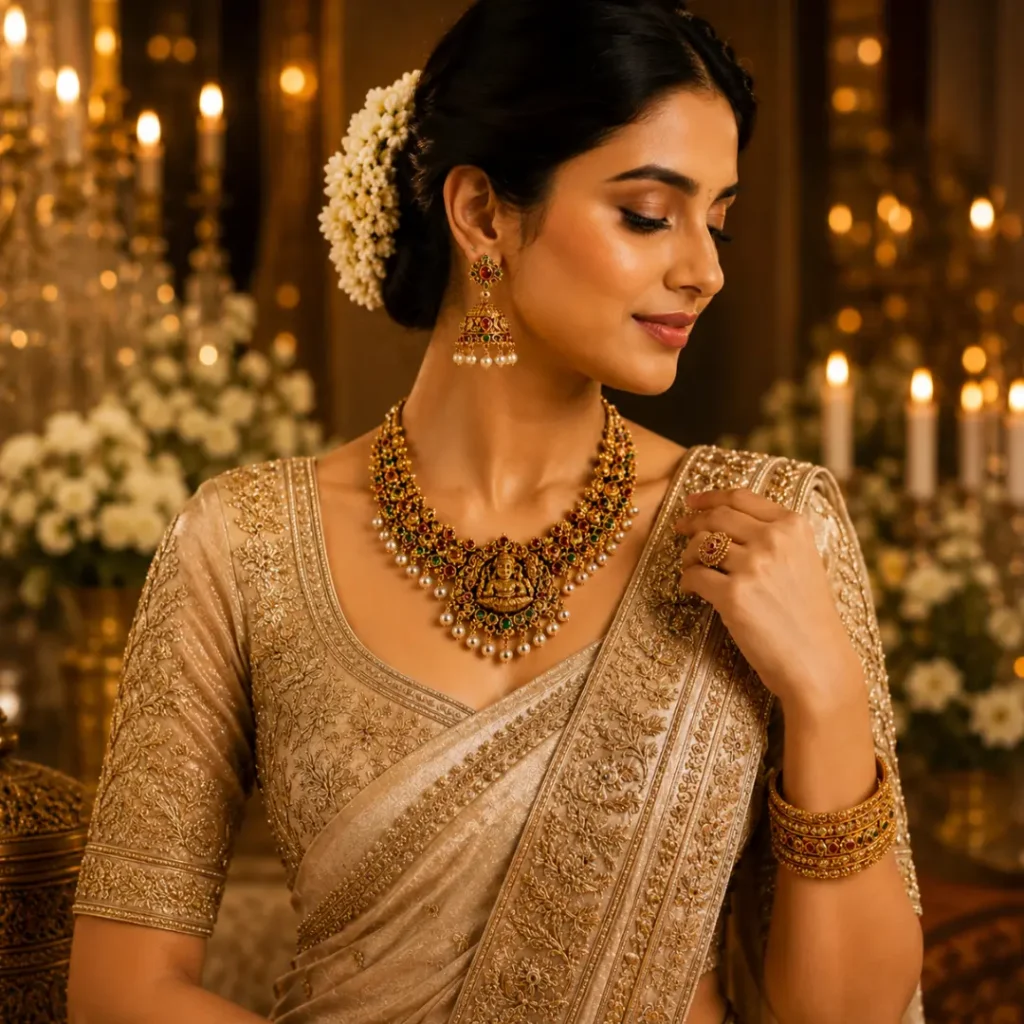
South Indian weddings are renowned for their grandeur, elegance, and deep-rooted traditions, and temple jewellerys plays a central role in these celebrations. Brides often wear elaborate temple-inspired necklaces, chokers, earrings, waist belts, bangles, and hair ornaments that complement traditional silk sarees and bridal attire.
The significance of temple jewellerys in weddings goes beyond aesthetics. These ornaments are considered auspicious and are believed to bring prosperity, happiness, and divine blessings to the newly married couple. Many families invest in heirloom-quality pieces that can be passed down through future generations, making temple jewellery an important part of family heritage.
Bridal temple jewellerys is carefully selected to create a harmonious and regal appearance. Layered necklaces featuring divine motifs, antique temple jewellerys designs, and gemstone embellishments enhance the bride’s elegance while reflecting cultural traditions. The rich golden hues of these ornaments symbolize abundance and prosperity, making them ideal for wedding ceremonies.
Modern brides often combine traditional temple jewellery with contemporary styling techniques, creating a unique blend of heritage and sophistication. This adaptability has contributed significantly to the enduring popularity of temple-inspired ornaments in the bridal jewellery market.
Distinctive Features of Temple Jewellery
One of the most remarkable aspects of temple jewellerys is its unmistakable design language. Every piece is characterized by intricate detailing, sculptural artistry, and symbolic motifs that distinguish it from other jewellery styles. The craftsmanship involved requires exceptional skill and patience, often taking weeks or even months to complete a single ornament.
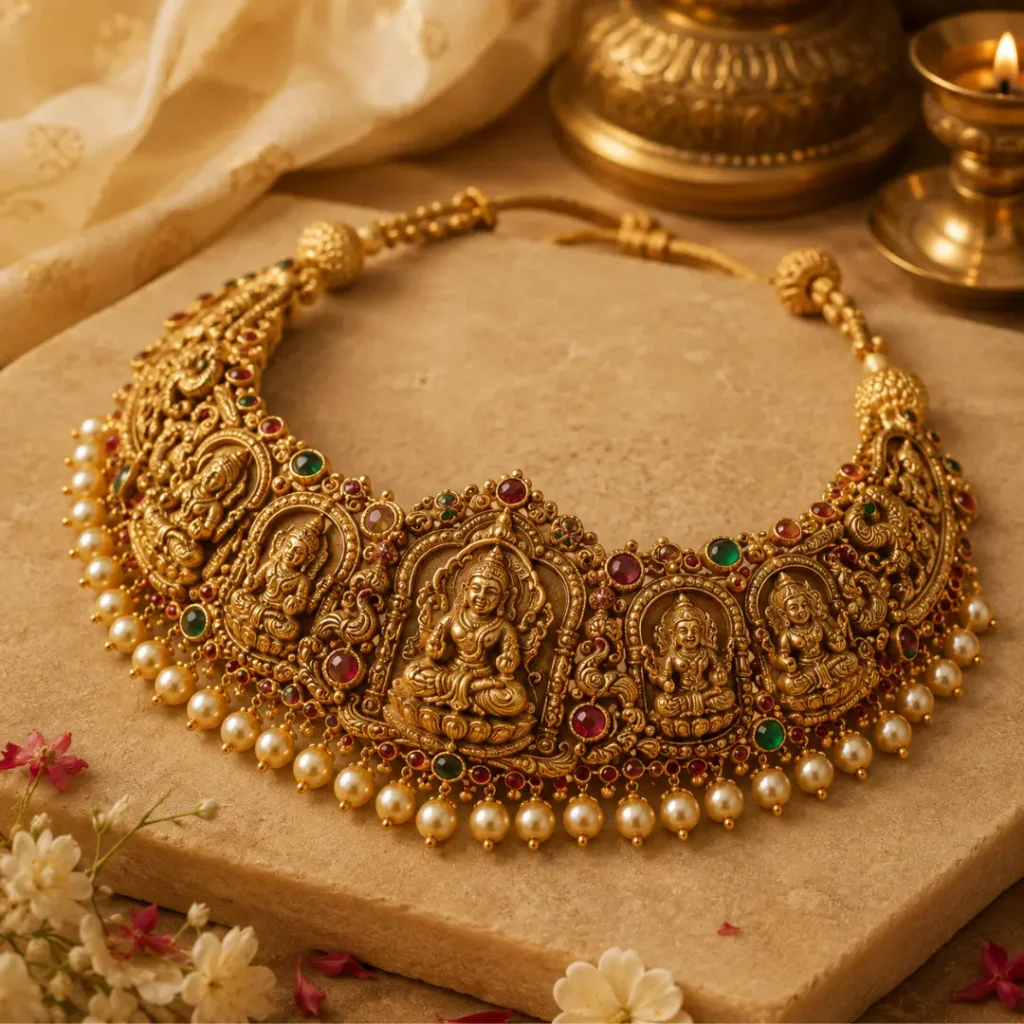
Gold remains the primary metal used in temple jewellery due to its association with purity, prosperity, and divine energy. Many designs incorporate precious and semi-precious gemstones such as rubies, emeralds, pearls, and uncut diamonds to enhance their visual appeal. The combination of vibrant stones and intricate goldwork creates a luxurious and regal appearance.
A defining characteristic of temple jewellerys is the presence of divine imagery. Depictions of Lakshmi, Krishna, Ganesha, and various temple-inspired motifs are carefully integrated into necklaces, earrings, pendants, and bangles. These elements reinforce the spiritual significance of the jewellery while showcasing the artistic brilliance of traditional craftsmen.
The popularity of antique temple jewellery designs stems from their vintage aesthetic and handcrafted appearance. These designs often feature oxidized finishes, detailed carvings, and traditional techniques that evoke a sense of history and authenticity. Their timeless elegance continues to captivate jewellery enthusiasts across generations.